


Recovering from surgery can be a challenging and time-consuming process, but the right physiotherapy techniques can significantly speed up the recovery process. Physiotherapy not only helps reduce pain but also aids in restoring movement, strength, and function. At Noble Physio Care, we offer personalised physiotherapy services in Williams Landing and Point Cook to help patients recover more efficiently and return to their daily routines. In this blog, we’ll explore some of the top physiotherapy techniques that can help speed up recovery after surgery.
Manual Therapy
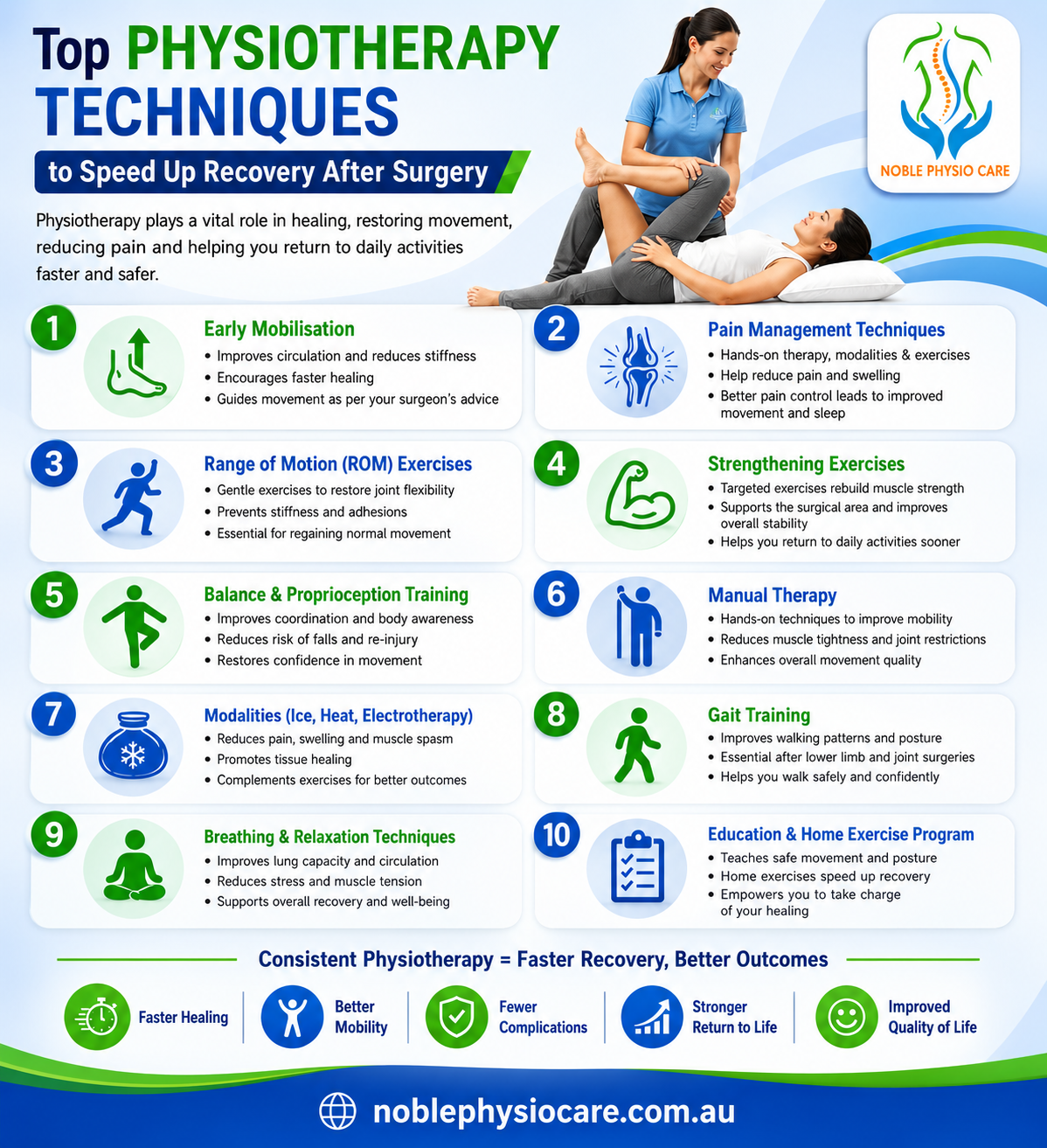
Manual therapy is one of the most effective physiotherapy techniques used to treat post-surgery pain and stiffness. This hands-on approach involves the physiotherapist using their hands to manipulate and mobilise the joints, muscles, and soft tissues. Manual therapy can help reduce pain, improve mobility, and promote healing. This technique is commonly used for joint replacements, soft tissue injuries, and spinal surgeries.
Strengthening Exercises
Post-surgery rehabilitation often involves rebuilding strength in the affected muscles. Strengthening exercises are designed to restore muscle function and improve endurance. Physiotherapists at Noble Physio Care in Point Cook tailor exercise programs to suit each patient’s needs and recovery stage. These exercises focus on gradually increasing strength while preventing further injury or strain on healing tissues. By strengthening the muscles around the affected area, patients can regain mobility and support long-term recovery.
Range of Motion (ROM) Exercises
One of the most important aspects of post-surgery recovery is restoring the range of motion (ROM) in the affected joints. ROM exercises focus on improving flexibility and mobility by stretching and moving the joints through their natural movements. These exercises help reduce stiffness, increase circulation, and prevent adhesions (scar tissue) that may limit movement. Regular ROM exercises can speed up recovery and ensure that patients regain full functionality in the affected area.
Heat and Cold Therapy
Both heat and cold therapy are commonly used physiotherapy techniques to alleviate pain and inflammation following surgery. Cold therapy, or cryotherapy, is typically used in the initial phase after surgery to reduce swelling and inflammation. On the other hand, heat therapy can be applied during later stages of recovery to increase blood flow, relax muscles, and ease stiffness. Physiotherapists may recommend alternating heat and cold treatments to improve recovery speed and reduce discomfort.
Electrical Stimulation Therapy
Electrical stimulation therapy uses electrical impulses to stimulate muscles, nerves, and tissues, promoting healing and pain relief. This technique is particularly effective in reducing muscle atrophy (muscle wasting) after surgery. By improving circulation and encouraging muscle contraction, electrical stimulation therapy can help reduce swelling, alleviate pain, and promote tissue repair. Many post-surgery patients in Point Cook benefit from this method as part of their rehabilitation program.
Postural Training and Education
Postural training is an often-overlooked but essential part of the recovery process. After surgery, it’s important to develop proper posture to prevent strain on healing muscles and joints. Physiotherapists at Noble Physio Care provide postural assessments and educate patients on how to move, sit, and sleep to promote healing. This can be especially useful after surgeries that affect the spine, neck, or pelvis.
Aquatic Therapy
For patients recovering from surgery, aquatic therapy offers a low-impact exercise option. The buoyancy of water supports the body, reducing the risk of strain and injury during exercise. This technique is particularly beneficial for joint replacement surgeries and musculoskeletal injuries. Aquatic therapy improves strength, flexibility, and cardiovascular fitness while minimising stress on the body, making it a great recovery method for individuals who need a gentler form of exercise.
Surgical recovery can be a lengthy process, but with the right physiotherapy techniques, patients can recover more quickly and effectively. Physiotherapy in Williams Landing and Point Cook at Noble Physio Care offers a range of services designed to help patients regain strength, mobility, and independence after surgery. Techniques like manual therapy, strengthening exercises, ROM exercises, and heat and cold therapy play a crucial role in accelerating recovery, reducing pain, and improving overall functionality.
Schedule An Appointment Today
If you or a loved one is recovering from surgery, Noble Physio Care is here to help. Contact us today to learn more about our physiotherapy services in Williams Landing and Point Cook, and let us help you get back to your everyday activities with confidence.
How does manual therapy help after surgery?
Manual therapy involves hands-on techniques used by physiotherapists to mobilize joints and tissues. After surgery, it helps reduce pain, ease stiffness, improve blood flow, and restore movement, speeding up the recovery process.
What are strengthening exercises, and why are they important after surgery?
Strengthening exercises are designed to rebuild muscle strength and endurance after surgery. They are important because they help restore function to weakened muscles, support the injured area, and prevent re-injury, ultimately speeding up recovery.
How can range of motion (ROM) exercises speed up recovery?
ROM exercises help restore flexibility and mobility in the affected joints by stretching and moving them through their natural range. These exercises help reduce stiffness, increase circulation, and prevent scar tissue formation, leading to faster recovery.
How do heat and cold therapies aid in post-surgery recovery?
Heat therapy increases blood flow, relaxes muscles, and alleviates stiffness, while cold therapy reduces inflammation, swelling, and pain. Alternating between heat and cold can help accelerate healing, reduce discomfort, and speed up the recovery process after surgery.
What is electrical stimulation therapy, and how does it help with recovery?
Electrical stimulation therapy uses electrical impulses to stimulate muscles and tissues, promoting healing, reducing pain, and improving muscle function. It is especially beneficial for preventing muscle atrophy and enhancing circulation during recovery.
Why is postural training important after surgery?
Postural training helps prevent unnecessary strain on healing tissues and joints. It teaches patients proper body mechanics for movement, sitting, and sleeping, ensuring that they don’t put excessive stress on their body while recovering from surgery.
How does aquatic therapy benefit post-surgery patients?
Aquatic therapy uses the buoyancy of water to provide low-impact exercises, which reduces strain on the body during movement. It is especially helpful for joint replacement surgeries and musculoskeletal injuries, as it promotes strength, flexibility, and cardiovascular fitness without the risk of injury.
When should I start physiotherapy after surgery?
The timing for starting physiotherapy depends on the type of surgery and your recovery progress. In many cases, physiotherapy can begin as soon as the doctor gives the green light, often within a few days to a week after surgery, to prevent stiffness and promote early healing.
How can physiotherapy at Noble Physio Care help with recovery?
At Noble Physio Care, we offer a range of personalised physiotherapy techniques to help speed up recovery after surgery. From manual therapy and strengthening exercises to postural training and aquatic therapy, our team works with you to create a customised rehabilitation plan tailored to your specific needs and recovery goals.